Title
Need a Health Benefits Quote but Don’t Have a Broker?
Body
Maybe you handle payroll, hiring, and benefits for your business. When the renewal arrives, you need to compare plans while answering every other question on your desk. You don’t need to sort through all the options alone.
Through our chamber’s partnership with Business Health Trust (BHT), members can request quotes for medical plans from major carriers, consider dental and vision, and get help with enrollment and billing. If you have a broker, bring them in. If you don’t, BHT can help connect you with one.
Start with five facts about your business
You don’t need to pick a plan before you ask for help. Bring five things: your eligible headcount, your employees’ locations, what you pay today, your renewal price, and the top complaints or questions from your team. Flag any provider networks or prescription coverage employees should check for themselves.
Also say what you want to improve. Maybe your current network leaves out a hospital employees use. Maybe the premium is becoming difficult to carry. Maybe employees don’t know how to use a benefit you already pay for. Ask the broker to show how each proposed plan would address the problem you named.
Decide who will make the final choice and what they need to see. An owner may need a monthly budget and an effective date. A benefits administrator may need to know how enrollments, terminations, and invoices are handled. Employees need a clear comparison of their payroll deductions, provider access, and costs when they seek care. Ask for those views early so you don’t end up with a quote that answers only one person’s questions.
Keep private medical information out of a general benefits conversation. Employees can check their own providers and prescriptions when a shortlist of plans is ready. Your job is to define the business needs and give people enough information to make their own coverage choices.
If the business has never offered health coverage, say so. The conversation can begin with an affordable employer contribution and a realistic sense of what employees could pay. If you already offer coverage, bring the renewal notice and a list of the questions employees ask most often. These details let the broker quote plans that match your business rather than a generic list.
Ask why each plan made the shortlist
BHT offers more than 80 medical plan options overall, along with dental, vision, life, disability, and other coverage choices. Ask your broker or BHT contact to pick a few relevant options and explain why each one belongs on the shortlist.
Request a side-by-side view of employer premiums and employee costs. Check provider networks, deductibles, copays, out-of-pocket limits, and prescription coverage. If a price looks much lower, ask what changed. The tradeoff may be appropriate for your workforce, or it may move a cost to employees at a time they use care.
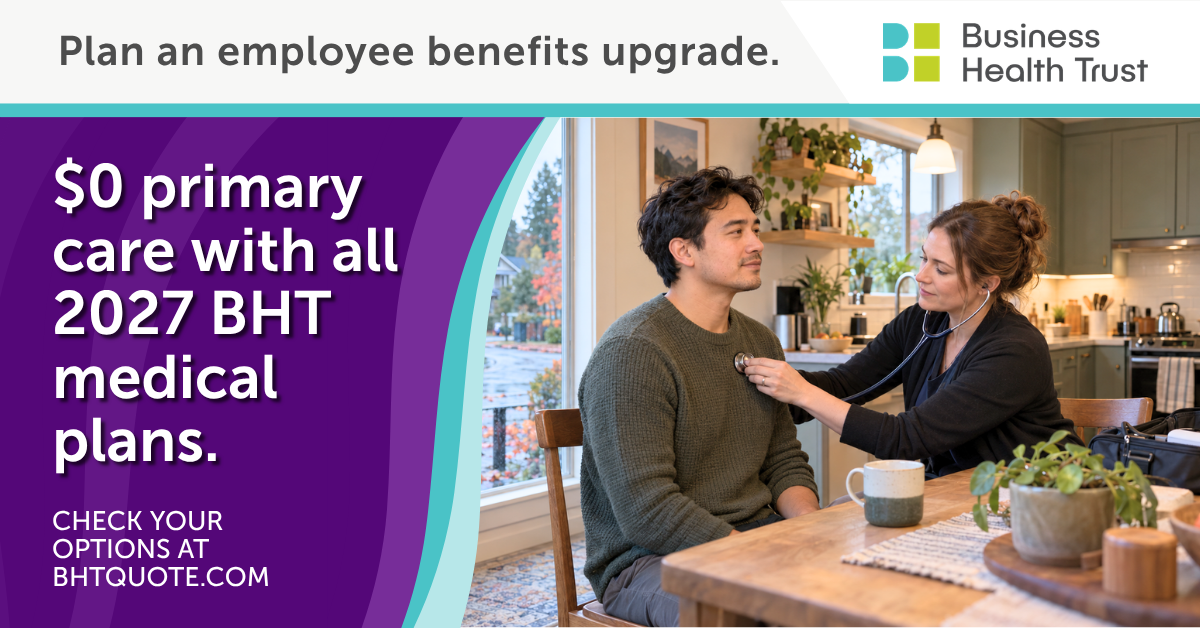
Most BHT medical plans include Nice Healthcare at no additional charge. Eligible employees on those plans get $0 primary care, mental health, and physical therapy visits through Nice. Nice is separate from medical insurance, and its in-person services vary by area. Ask which quoted plans include it, who is eligible, and how employees sign up.
Find out who handles enrollment and billing
The plan you choose is only part of the work. Employees need enrollment instructions, clear dates, and an answer when they have a question. Someone needs to manage ongoing changes, billing, and new-hire information. BHT describes its administrative support as including consolidated billing, online payments, online enrollment access, and customizable plan booklets. Ask BHT to show you what those services would look like for your proposed package.
Get the contact for each kind of question before enrollment. Who corrects an invoice, updates an employee’s eligibility, or helps someone with a claim? Put the broker, BHT, and carrier contacts in one handout for your staff.
Ask for a simple communication plan. Employees should know when to enroll, how to find a provider, what their likely costs are, and where to start for everyday care. If Nice is included, share the setup instructions and an example of a situation it can handle. You can repeat those instructions in a new-hire email and during the year instead of expecting people to remember one annual meeting.
If you work with a broker, they can remain part of the process. BHT works with brokers and encourages employers to bring theirs to the conversation. Ask your broker to quote BHT alongside your other options. If you are starting without a broker, ask BHT what connection and support are available in your area.
Ask the broker to show the actual network, out-of-pocket costs, and enrollment steps for the plan they’re recommending. If Nice is included, ask to see how an employee books a visit.
Set your quote and enrollment dates
Leave enough time before your intended effective date to compare proposals, verify doctors and prescriptions, communicate with employees, and handle enrollment. Your current agreement and the prospective plan’s requirements can affect timing. Ask those questions early rather than assuming every step can happen in a week.
If you are a chamber member, request a BHT quote and state the two or three things you most want to improve. Ask for the premium, employee costs, network, Nice eligibility, and enrollment timeline in one comparison. Then decide whether the change makes sense for your budget and your team.