
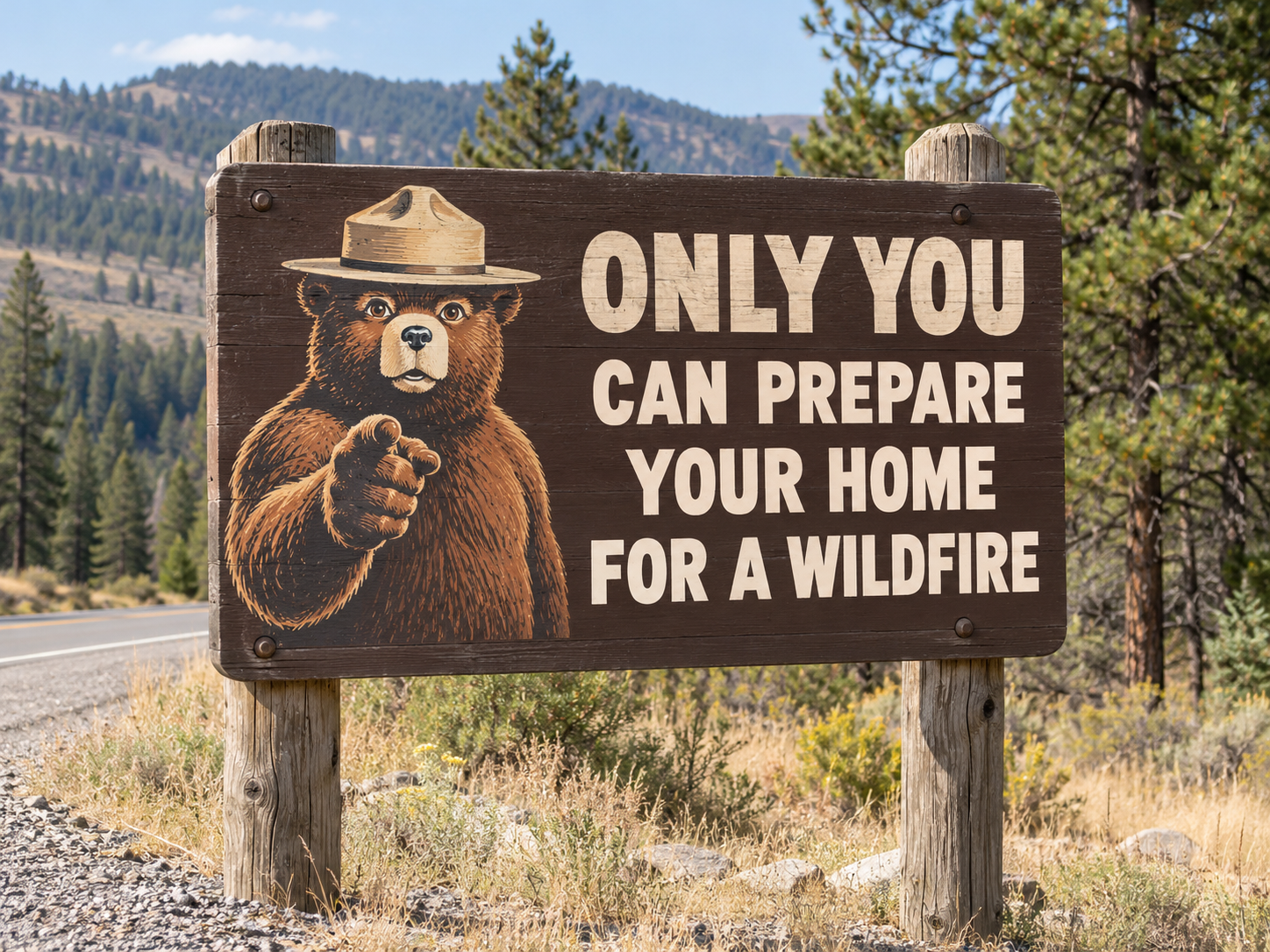
A wildfire doesn’t have to reach a home’s walls for it to catch fire. Windblown embers can ignite debris in gutters, enter through vents or set fire to plants and mulch beside the house. Reducing those ignition points can give a home a better chance of surviving.
In “What Goes Into a Wildfire Prepared Home?”, OIC Answers on Insurance host Aaron VanTuyl visits a home outside Winthrop with OIC policy analyst David Forte. The homeowner, John, explains how he worked with his architect and contractor to earn a Wildfire Prepared Home designation from the Insurance Institute for Business & Home Safety, or IBHS.
The conversation offers a useful starting point for Washington homeowners: what to change, how to verify the work and what it could mean for insurance.
Protecting the home means looking at the whole property
John brought wildfire protection into the design process early. His choices included fiber-cement siding, protected eaves and noncombustible surfaces near the house. Planning those features with his builder helped make them part of the home from the start.
Existing homeowners can also reduce their risk. The IBHS preparation checklist covers several connected areas:
- Roof and gutters: Use a Class A fire-rated roof covering and regularly remove leaves, pine needles and other debris.
- Vents: Address openings where embers could enter the attic or crawl space, using the vent protections specified in the checklist.
- The first five feet: Keep the area immediately around the home free of combustible materials, including plants, wood mulch and combustible fencing. Gravel, concrete and pavers are options.
- Decks and the surrounding yard: Clear accumulated debris and address vegetation, stored materials and nearby structures that could carry fire toward the home.
“It’s an entire system that has to be completed,” Forte explains. A designation requires meeting all the requirements for the selected level. A fire-resistant roof alone leaves other ways for a home to ignite.
Two levels address different wildfire threats
The program is available in Washington and offers two levels of protection:
- Essential, formerly Base: Focuses on windblown embers. Many existing homes can be upgraded to meet this level.
- Enhanced, formerly Plus: Adds protection against direct flames and radiant heat. It involves more exterior building features, such as noncombustible siding and upgraded windows, and is often pursued during construction or major renovations.
For homeowners planning a roof replacement, new siding or a deck project, reviewing the requirements before choosing materials can help that investment support a future designation.
Verification gives insurers something concrete to assess
The designation involves an independent review of the completed work. As Forte explains, “And that gives insurers confidence.”
It gives an insurer evidence that the property meets a defined wildfire protection standard. That may help when seeking coverage, but it doesn’t guarantee a policy, renewal or premium discount. Ask your home insurance agent how each insurer treats the designation before assuming it will change your price or eligibility.
Under the current IBHS process, homeowners complete the required improvements, apply, submit photos and go through an evaluation. The application fee is $125, separate from the cost of any improvements. Designations last three years, with annual photo-based maintenance reviews after the first and second years.
Three useful steps to take now
- Get a property-specific starting point. Washington DNR’s Wildfire Ready Neighbors program provides a free Wildfire Ready Plan to help prioritize actions and connect residents with local wildfire experts.
- Walk the property with the checklist. Use the IBHS guide, available in English and Spanish, to identify maintenance tasks and larger projects before applying.
- Review coverage before a fire. The OIC’s wildfire insurance guidance explains what to discuss with your agent, including rebuilding limits, personal belongings and additional living expenses if you have to leave home.
Preparation also includes making a record of what you own. Photos, videos and receipts can help establish a loss if you ever need to file a claim. Our wildfire insurance claims overview explains how to document damage, keep a claim journal and avoid rushed decisions about repairs.
For employers, these are useful resources to include in a staff newsletter or emergency planning conversation. Employees facing evacuation or property loss may need time away, temporary housing and help finding reliable information. Business Health Trust’s work centers on supporting Washington employers and their teams, and sharing practical preparation resources is one way to help before a crisis.
Related Posts

Heritage, Heritage Prime, and Heritage Signature are Premera provider networks. They help determine which doctors, hospitals, and medical … Premera Heritage, Heritage Prime, and Heritage Signature: What’s the Difference?

What would other health plans cost for the same employees? And would starting coverage in December instead of … Prepare for Renewal With BHT’s Free Plan Comparison Tool

Update: WA Small Group rates have been finalized for 2027. More here. When health insurance rates jump more … OIC Podcast: Why Health Insurance Rates Keep Rising and Why the State Can’t Just Say No

Titanium, Sterling, and Cobalt are three Premera plan families available through Business Health Trust. The main differences are … Titanium, Sterling, and Cobalt: What do Premera plan families mean?

The lights go out. You find the flashlight. Then the harder questions start: How will you charge your … The Power’s Out. Now What?
A short medical appointment can mean a long interruption: travel, parking, a waiting room and the trip back. … Make Room for Care: Bringing Nice Healthcare Into Your Workplace