
A short medical appointment can mean a long interruption: travel, parking, a waiting room and the trip back. For someone juggling work and family, that can be enough to put care off.
A CDC report using 2022 survey data found that 12.5% of U.S. adults delayed or went without medical care because they were too busy with work or other commitments. Making care easier to fit into the day is one barrier employers can help remove.
For businesses offering Nice Healthcare through Business Health Trust, a private room can give employees a place for virtual appointments and, where available, visits from Nice’s mobile care team.
Start with the care your team can receive
Nice is a Direct Primary Care clinic, and most visits begin virtually. When an in-person follow-up is needed, Nice can bring services such as physical exams, blood draws, rapid tests, X-rays and EKGs to members in its in-person service areas. Check your workplace ZIP code before planning for mobile visits.
This is already happening at BHT member businesses. Lori from Revive Counseling in Spokane describes receiving a blood draw at work between client appointments. A needed follow-up fit into a day when she couldn’t find time to visit a lab.
Choose a room that works for people and equipment
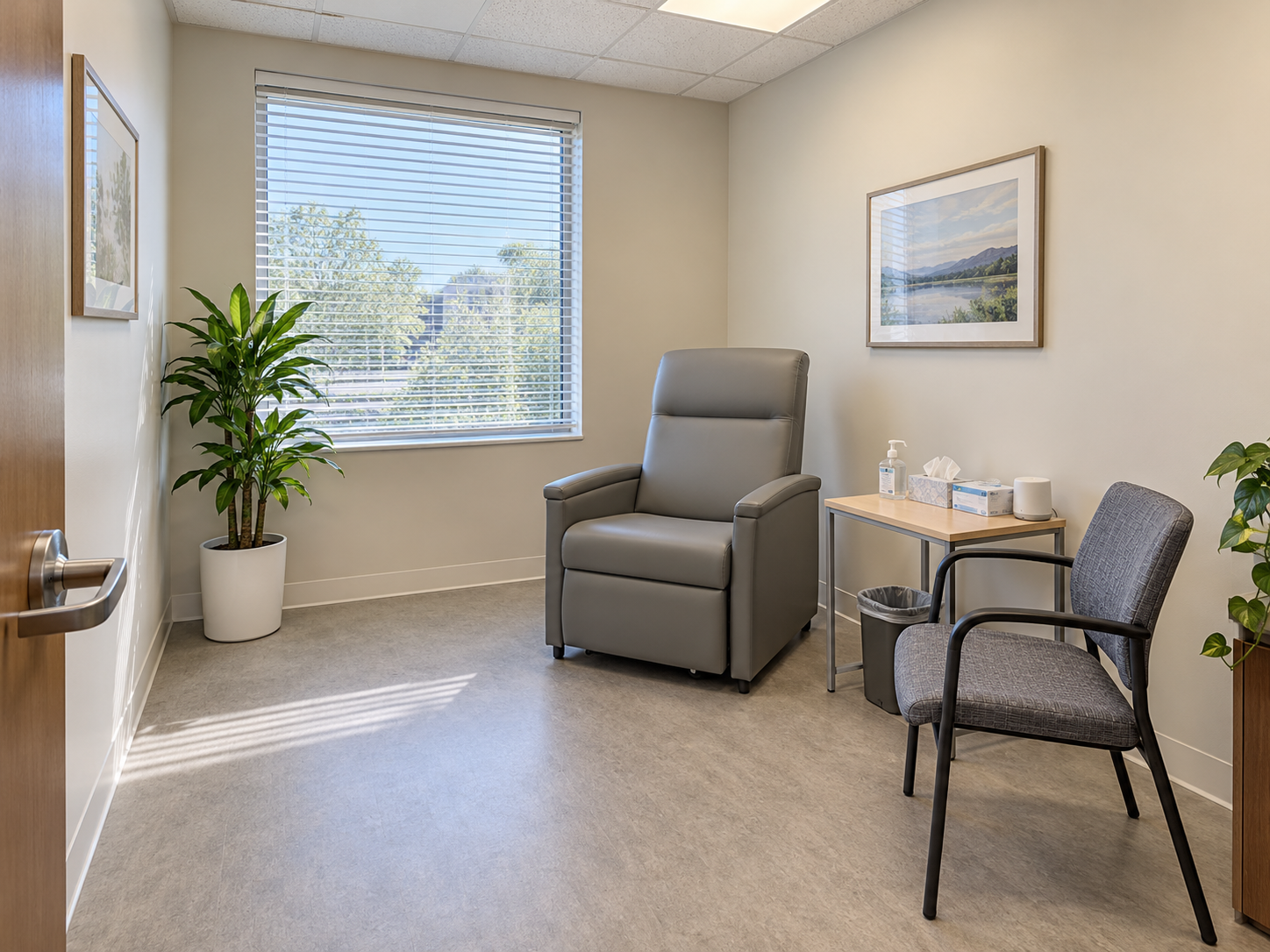
An unused office or small meeting room may be a starting point. Nice’s clinic setup guide recommends a well-lit room measuring at least 6 feet by 7 feet, with:
- A chair for the clinician and a reclining chair for the patient.
- A table for supplies.
- A wastebasket.
- Hand sanitizer and face masks.
Ask Nice to confirm the layout, wheelchair access and equipment needs before buying furniture. Room dimensions alone don’t establish whether the space will work for everyone.
Equipment access needs attention, too. For mobile X-rays or EKGs, Nice’s guide specifies fewer than three stairs into the building or office if there’s no elevator. Confirm the route with Nice before scheduling those services.
Make privacy part of the setup
A room can be close to someone’s desk and still feel too exposed for a health conversation. Nice recommends a closed door and a white noise machine. Test the space with an ordinary conversation while someone listens outside. If words are easy to hear, improve privacy before using it for visits.
Cover interior windows as needed, prevent interruptions and check for cameras or recording devices. HHS guidance for telehealth patients recommends a private location and turning off devices that could overhear or record the appointment.
Employees should book their care directly with Nice. Keep medical details off shared room calendars, and make using the space optional. Some employees will feel more comfortable receiving care at home.
Give virtual visits room, too
A private space is useful even outside Nice’s mobile service areas. Employees can use it for virtual primary care or mental health therapy. For virtual physical therapy, leave enough clear floor space to move safely.
Provide somewhere to set a device and check reception before announcing the room. HHS recommends using a personal device and avoiding workplace devices or networks when possible. A personal cellular connection can give employees another option.
Make it easy to use during a real workday
Share short instructions explaining where the room is, how to reserve it and how to book with Nice. For visiting clinicians, include parking, building entry, floor and suite details, as Nice’s guide recommends.
Arrange cleaning between uses and confirm with Nice how clinical supplies and waste will be handled. Keep the room available when appointments are booked. Managers should also plan for the time and work coverage employees need to attend.
Through BHT, eligible members can use Nice’s covered services with no copays or deductibles. A private space and time to use it help turn that benefit into care employees can actually fit into their lives. Visit BHT’s Nice employer resources for employee communications, account setup guidance and orientations to help your team get started.
Related Posts

Heritage, Heritage Prime, and Heritage Signature are Premera provider networks. They help determine which doctors, hospitals, and medical … Premera Heritage, Heritage Prime, and Heritage Signature: What’s the Difference?
Starting January 1, 2027, Premera Blue Cross will stop requiring EviCore utilization review for massage therapy. For employees … Premera Removes a Review Step for Massage Therapy in 2027

A high blood pressure reading can leave you with plenty of questions. The same goes for a type … Nice Healthcare’s Specialized Programs: Support That Goes Beyond the First Visit

You wake up with a scratchy throat and tell yourself it’s just a cold. By lunchtime, you’ve bought … The Real Price of “It’s Just a Cold”

You get home from a night shift at 7 a.m. and plan to sleep after breakfast. Now add … What “Nighttime” Means When You Work Nights

BHT’s review of SERFF, the state insurance filing system, found that the filed rate tables for all nine … Washington’s 2027 Small Group rates are in. The differences might surprise you.